The Best Skincare Routine for Acne-Prone Skin, From a Clinical Esthetician
The Best Skincare Routine for Acne-Prone Skin, From a Clinical Esthetician
Acne-prone skin is one of the most misunderstood skin types I work with in my treatment room. And after 15 years of clinical practice in New York City, I have seen just about every approach people take with it, including the ones that make it significantly worse.
The frustrating truth is that most people with acne-prone skin are working too hard against their skin instead of with it. They are over-cleansing, over-exfoliating, skipping moisturizer, and layering too many active ingredients all at once. Then they wonder why their skin is not improving.
Today I want to walk you through the routine I actually recommend to my clients with acne-prone and oily skin types. It is simple, intentional, and built around what your skin genuinely needs rather than what the industry tells you to buy.
What Acne-Prone Skin Actually Means
Before we talk routine, I want to clear something up. Acne-prone skin is a skin type, not just a temporary condition. It means your skin tends to produce excess oil, is prone to clogged pores and congestion, and reacts easily to certain ingredients or environmental triggers.
This is important because understanding your skin type changes the way you shop, the way you layer products, and the expectations you carry into your routine. Acne-prone skin does not mean your skin is broken or dirty. It means your skin requires a specific, thoughtful approach.
And just like any other skin type, it can absolutely be healthy, clear, and radiant with the right care.
The Biggest Mistakes I See in My Treatment Room
Before I give you the routine, I want to address what I see most often, because avoiding these mistakes is just as important as following the right steps.
- Over-washing the face, sometimes three or four times a day, which strips the skin of its natural oils and causes it to produce even more oil in response
- Using harsh physical scrubs or exfoliating tools on active breakouts, which can spread bacteria and cause more inflammation
- Skipping moisturizer entirely because the skin feels oily, which is one of the most common and damaging habits I see
- Layering multiple strong active ingredients at the same time without understanding how they interact
- Reaching for the most aggressive product available under the belief that stronger equals faster results
- Changing products every few weeks before giving any routine a chance to actually work
The 5-Step Routine for Acne-Prone Skin
This is the routine I recommend for clients with oily and acne-prone skin types. It is designed to cleanse thoroughly, treat congestion, keep the skin balanced, and protect the barrier over time.
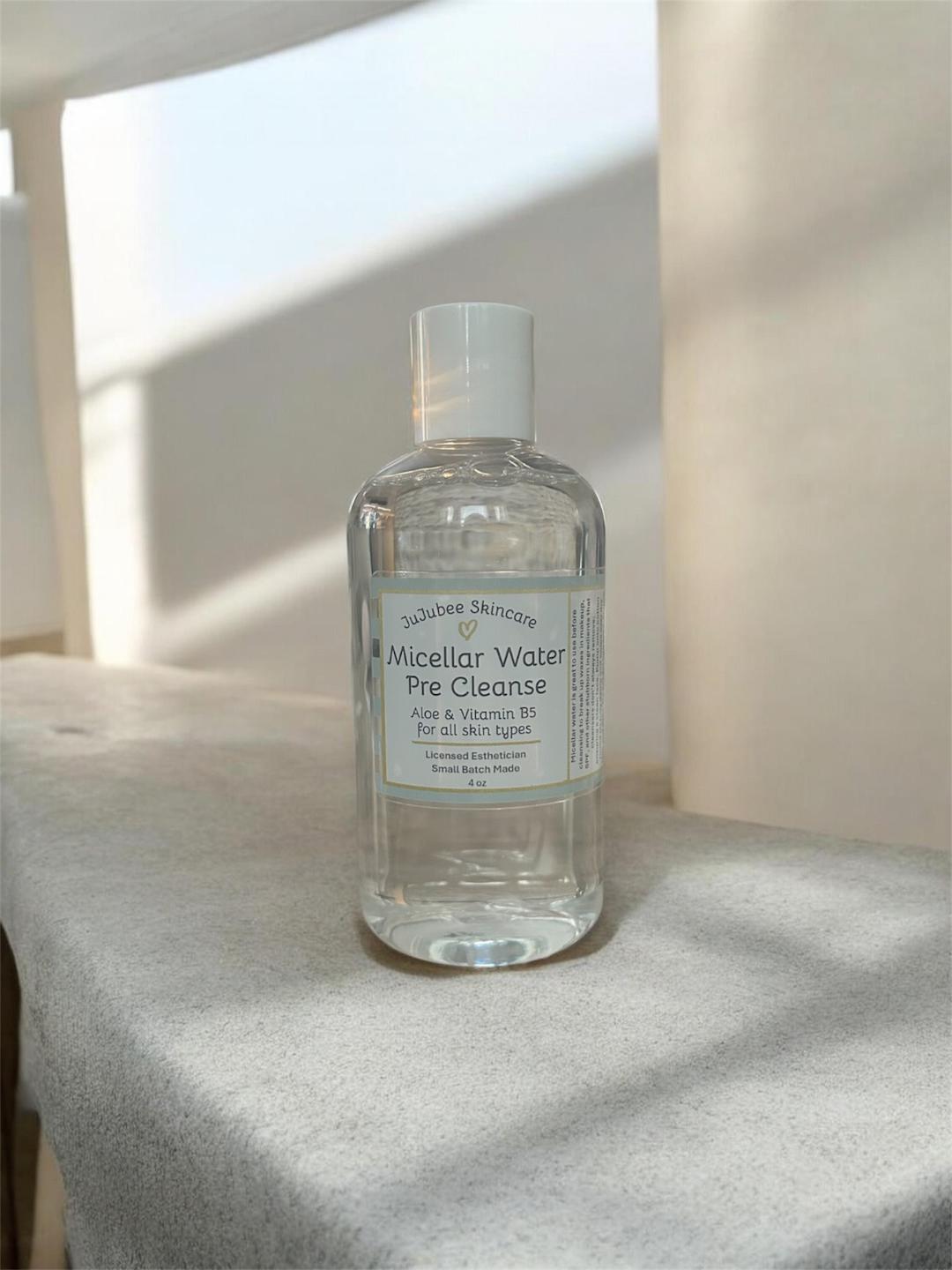
Before your cleanser, use a micellar water to remove surface makeup, SPF, sweat, and excess oil. This step makes your cleanser significantly more effective and helps prevent residue from settling into pores. Apply to a cotton pad and gently sweep across the face without scrubbing.
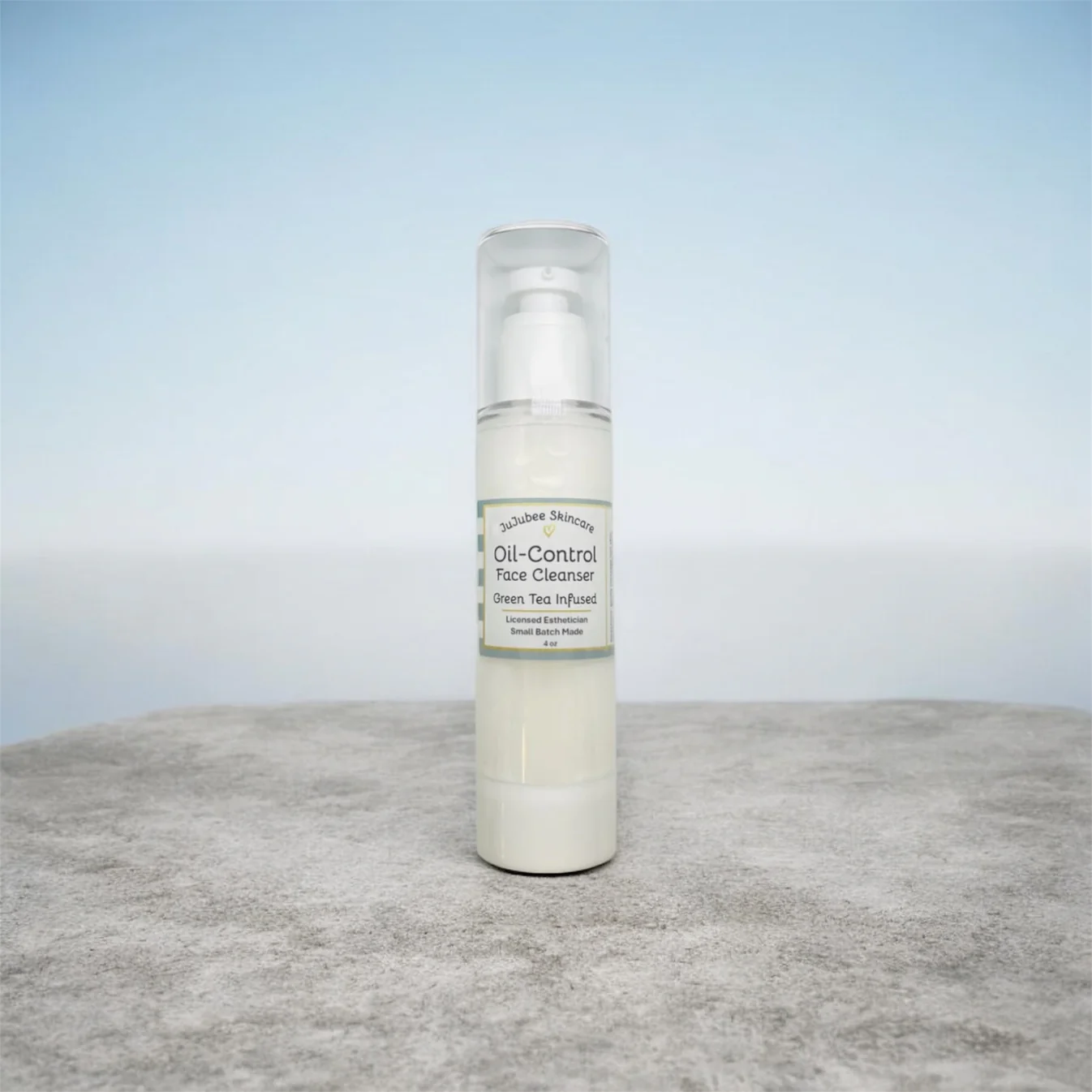
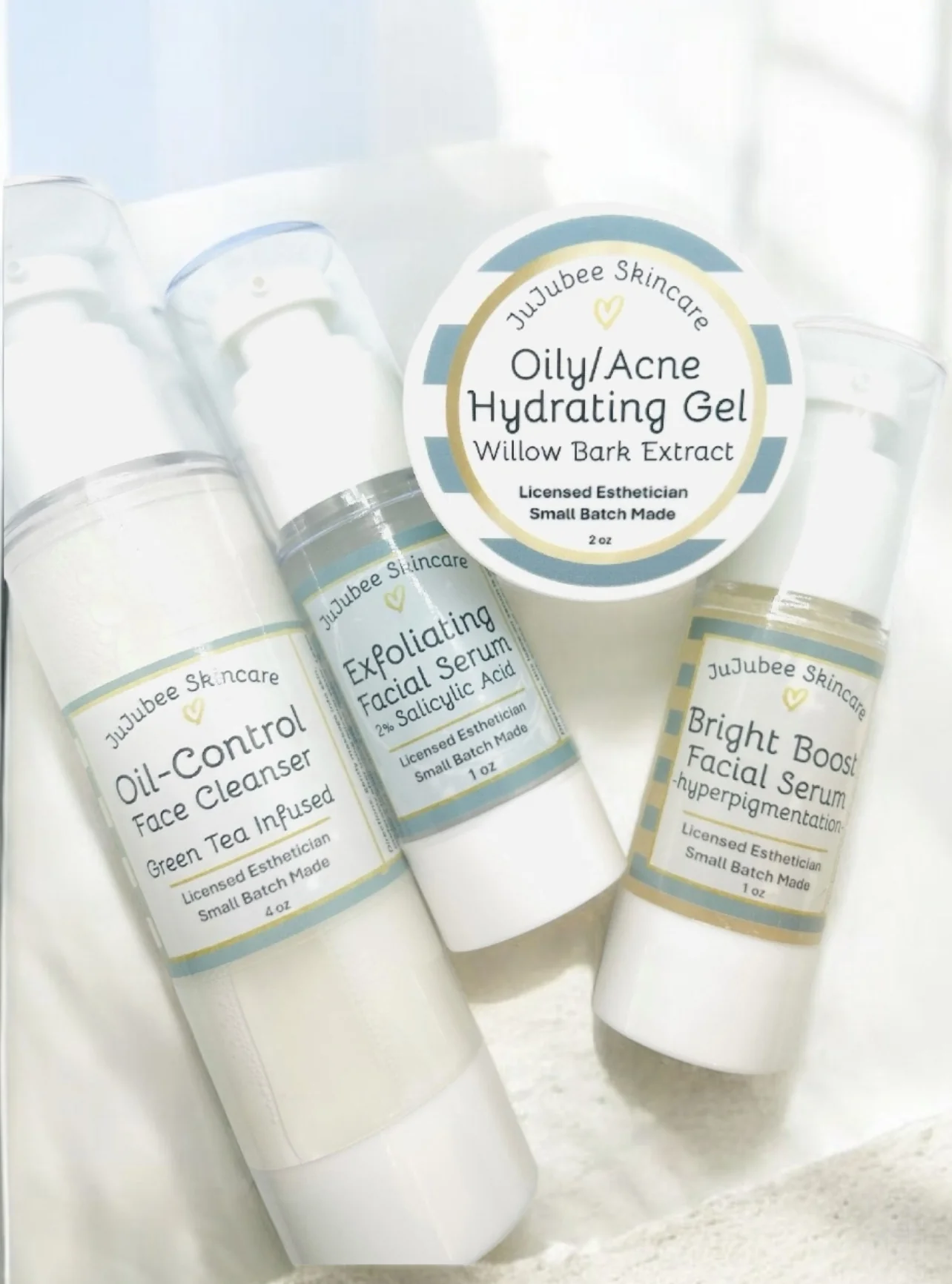
For oily and acne-prone skin, you want a cleanser that removes oil and congestion without stripping the skin barrier. The Green Tea Infused Facial Cleanser was specifically formulated for this skin type. It supports gentle oil balance while maintaining the integrity of the skin. Cleanse once in the morning and once at night. That is enough.
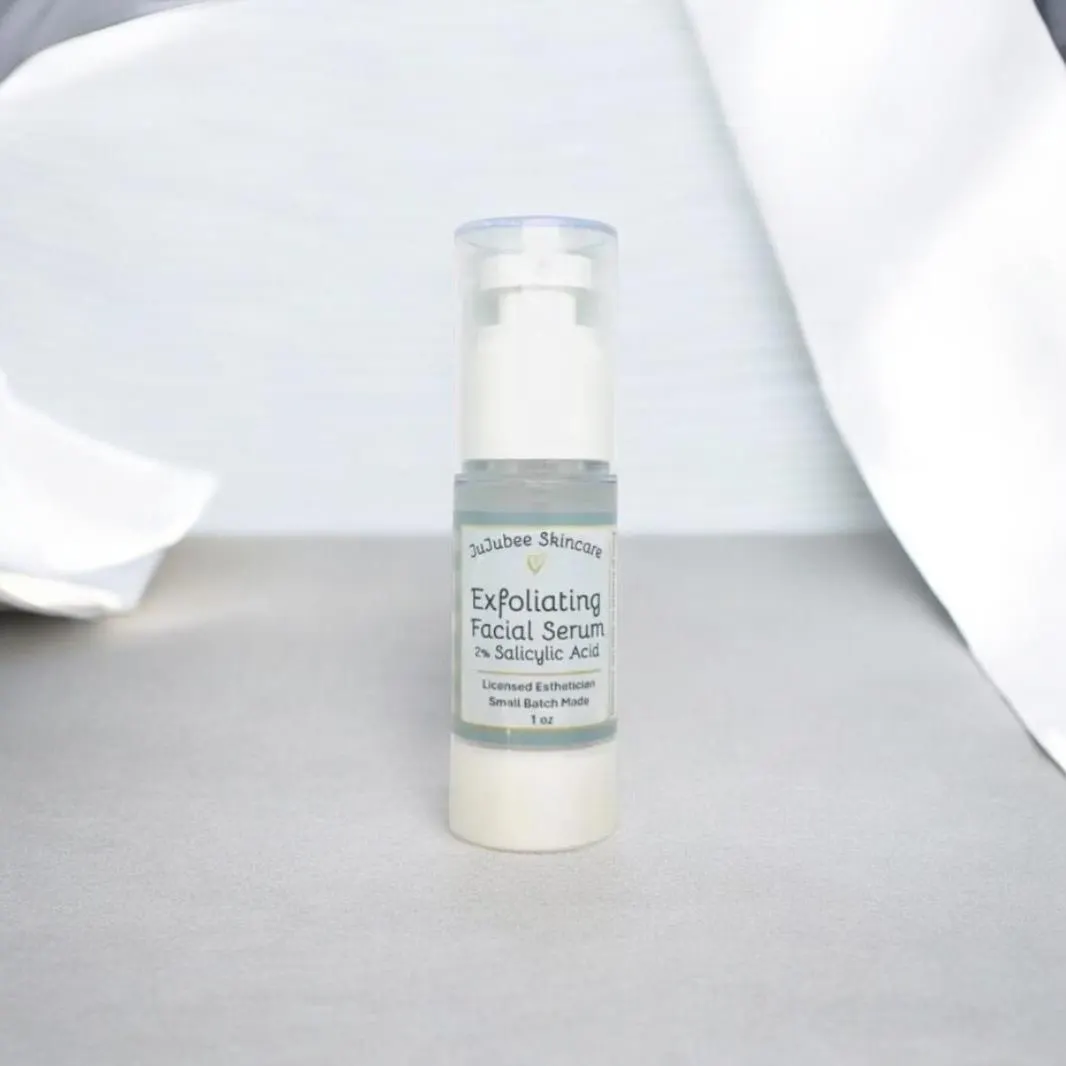
This is where you address congestion, clogged pores, and oil buildup directly. The 2% Salicylic Exfoliating Face Serum is designed to work within the pore to help support clearer, less congested skin over time. Salicylic acid is oil-soluble, which means it can penetrate through the oil in your pores in a way that other exfoliants cannot. Start by using it a few nights per week and build from there based on how your skin responds.
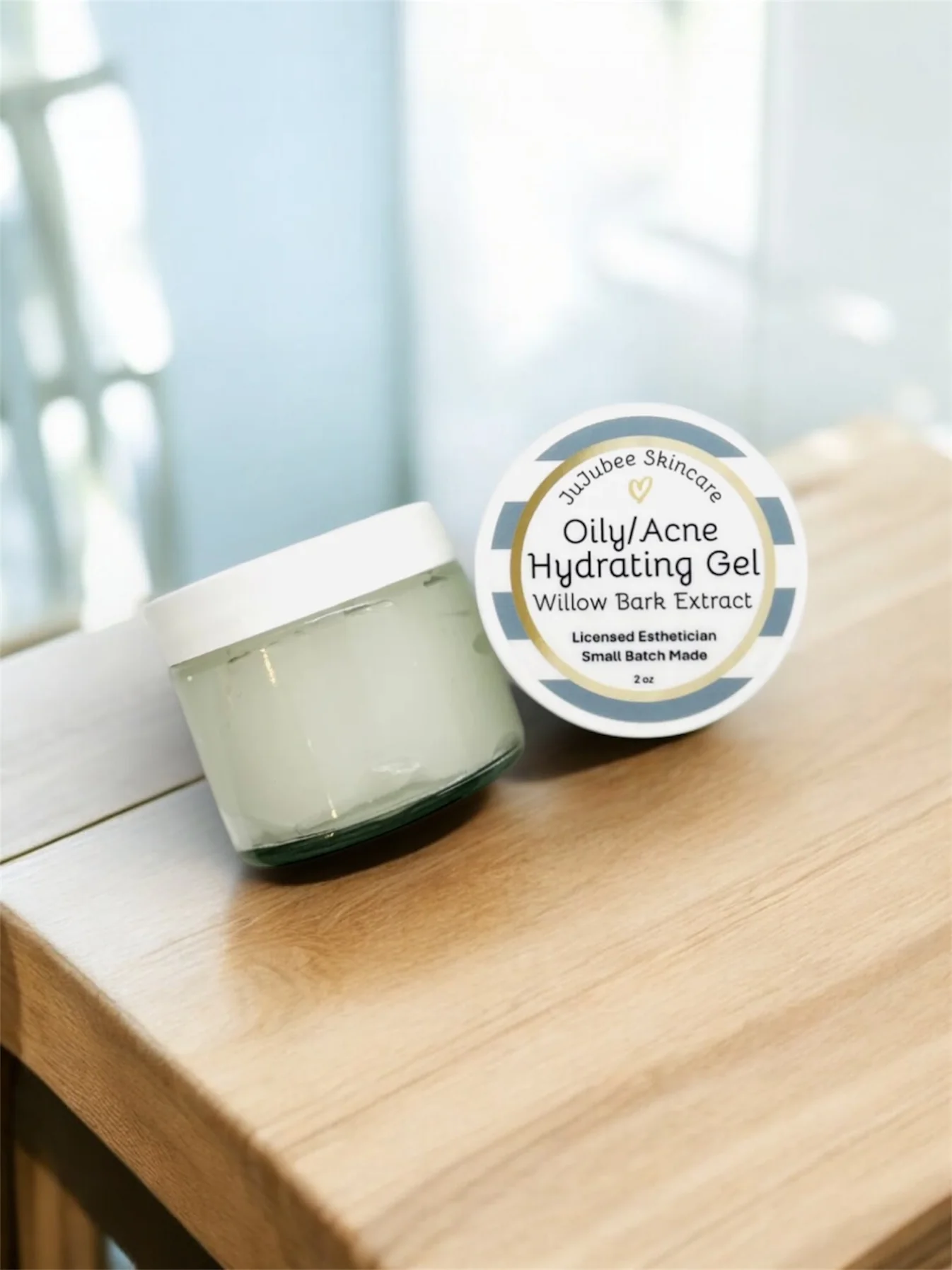
This step is non-negotiable, even for oily skin. You need to moisturize. The key is choosing the right formula. The Lightweight Oil-Control Gel Moisturizer is designed for oily and acne-prone skin types, providing the hydration your skin needs without the heaviness or pore-clogging ingredients that can make breakouts worse.
Sun protection is not optional. Unprotected sun exposure can darken post-breakout marks, increase inflammation, and contribute to long-term skin damage. Choose a lightweight, non-comedogenic SPF formula and apply it as the final step in your morning routine every day, regardless of the weather or how much time you plan to spend outdoors.
Products Designed for Acne-Prone and Oily Skin
Every product below was formulated with acne-prone skin in mind. Lightweight, clean ingredients that support balance, clarity, and a healthy skin barrier without clogging pores or adding unnecessary heaviness.
A Note on Weekly Treatments
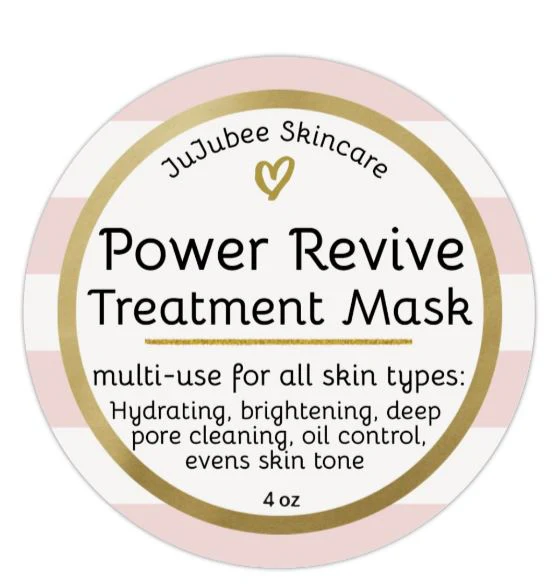
In addition to your daily routine, a clay mask used once or twice a week can be a helpful addition for acne-prone skin. Our Bentonite and Kaolin Clay Mask is designed to absorb excess oil, support pore clarity, and give your skin a deeper cleanse than your daily routine alone. Apply it after cleansing, leave it on for the recommended time, and follow with your serum and moisturizer.
Do not use a clay mask every day. For acne-prone skin, once or twice a week is sufficient. More frequent use can disrupt your skin barrier and lead to increased sensitivity.
Want a Professional Assessment of Your Skin?
Sometimes the most effective thing you can do for your skin is sit down with someone who has spent 15 years treating it professionally. Lindsey offers advanced clinical facial treatments in Chelsea, Manhattan, customized entirely to your skin type and concerns. Flat-rate, all-inclusive, no upsells.
Book a Facial in NYCExplore the Education MethodWhat to Skip if You Have Acne-Prone Skin
Knowing what not to use is just as valuable as knowing what to reach for. Here are the things I recommend avoiding:
- Heavy creams and oils that are comedogenic, meaning they are likely to clog pores
- Fragranced products, which can irritate already sensitive or reactive skin
- Physical scrubs with rough particles used on active breakouts or inflamed skin
- Multiple exfoliating ingredients layered in the same routine without guidance
- Alcohol-heavy toners that strip the skin and disrupt oil balance
- Constantly switching products before giving any formula 6 to 8 weeks to show results
If your skin is not improving after 8 weeks of consistent product use, the issue may not be the products. It may be the routine, the application, or an underlying concern worth discussing with a professional. Our Education page is a good place to start.